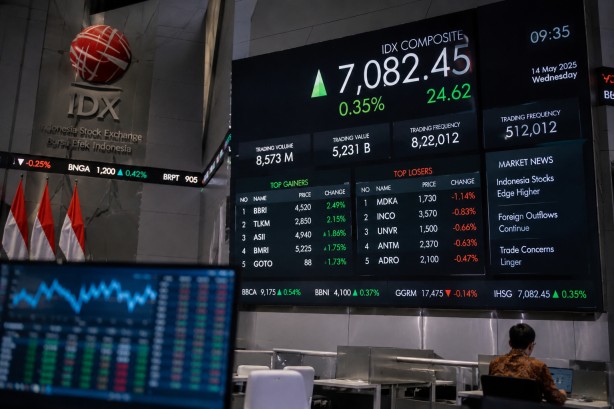
Amidst a backdrop of global economic uncertainties and persistent foreign investor outflows, Indonesia’s Jakarta Composite Index (JCI) saw a modest increase of 0.34% for the week concluding on July 24. This uptick was buoyed by a notable rise in trading activity, underscoring the resilience of local market participants in the face of challenging external conditions.
The Indonesia Stock Exchange reported a significant boost in its market capitalization, climbing to Rp 10,870 trillion. Meanwhile, the average daily trading turnover experienced a substantial jump, rising by 41% to reach Rp 19.76 trillion. Despite this positive momentum in trading volumes, foreign investors continued to pull back, remaining net sellers and contributing to a cumulative outflow of Rp 79.09 trillion for the year. This trend reflects a cautious stance from international investors toward Indonesian assets.
Global factors have weighed heavily on market sentiment, particularly the surge in oil prices driven by escalating tensions in the Middle East. Additionally, the imposition of new U.S. tariffs on imports from various trading partners, including a 10% tariff on selected Indonesian goods, has added to the economic headwinds.
In response to these developments, Indonesia’s Finance Ministry acknowledged the potential for higher oil prices to put additional pressure on the state budget for 2026. Nonetheless, the ministry assured that the country’s overall fiscal position remains stable, suggesting a level of preparedness to navigate these financial challenges.