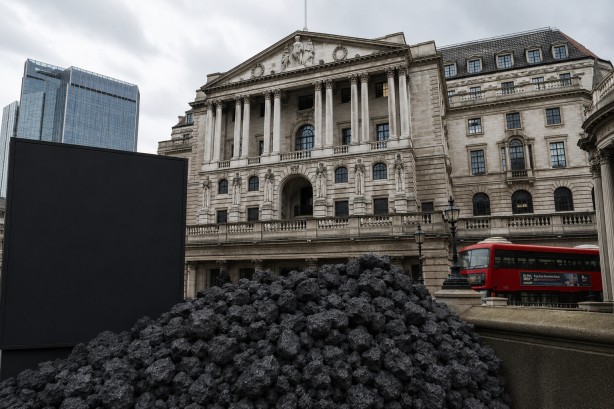
The Bank of England has taken a decisive step toward managing climate-related financial risks by announcing that, starting in October, it will no longer accept bonds linked to thermal coal companies as collateral for its lending operations. This move reflects the central bank’s commitment to addressing the financial impact of climate change.
Bonds serve as a crucial form of collateral for commercial banks, including major lenders, when they borrow from the central bank to facilitate daily operations and settle transactions. However, under the new policy, bonds associated with thermal coal— the fossil fuel commonly used in electricity generation—will be disqualified from this role.
The Bank of England emphasized that companies engaged in thermal coal are increasingly exposed to financial risks as global efforts to transition to cleaner energy and achieve net-zero emissions gain momentum. Consequently, assets related to coal could see a decline in value over time. To further safeguard its financial position, the central bank also plans to implement discounts on bonds from other sectors vulnerable to climate risks.
Environmental advocates have praised this decision, viewing it as a powerful message to financial markets. They believe it could incentivize commercial banks to lessen their involvement with industries that have significant environmental impacts. Already, over 150 prominent financial institutions around the world have imposed restrictions on businesses linked to the thermal coal sector.
Analysts suggest that the success of this policy will rely on the accuracy of climate risk assessments and whether similar strategies are applied to other environmentally detrimental activities in the future. This development signals a broader trend in the financial industry to align with sustainable practices and mitigate the economic threats posed by climate change.